Only the total slice count matters
2 of 10 slices is the same 20% as 20 of 100, a share means nothing without knowing the total.
Volume 03, Chapter 3
Mr A needs 5 million naira for a second workshop. A customer offers to lend it. Mr A instead offers something else: a permanent slice of the business itself, no fixed date to pay it back, no guarantee the customer ever sees the money again. Why would anyone say yes to that?
Equity is ownership, not a debt. When someone invests equity, they aren't lending money to be repaid, they're buying a permanent slice of the company itself.
2 of 10 slices is the same 20% as 20 of 100, a share means nothing without knowing the total.
The investment itself becomes part of the company, so it belongs in the number you divide by.
A smaller slice of a bigger pizza can be worth more than a bigger slice of the old one.
If your cap table adds up to anything else, a transaction is missing or miscalculated.
Remember Mr A and the customer from the start of this chapter. We'll walk through exactly what they agreed to later in this chapter. The short version: the customer wasn't lending money, he was buying a piece of the business itself. That's what equity is.
is ownership of a business, usually divided into shares. If you own equity, you own a slice of the company itself, not a debt the company owes you.
Equity = ownership. When someone invests equity into your business, they are not lending you money to be paid back. They are buying a permanent slice of the company itself. As the company grows, their slice grows in value with it. As the company shrinks, so does theirs. There is usually no fixed date when it ends.
Full glossary entry: Equity
Imagine a pizza.
The pizza represents the business.
If the pizza is cut into ten slices, and you own two of those slices, you own 20% of the pizza.
Equity works exactly the same way. Instead of a pizza, the "slices" represent ownership of the business, usually called shares. Instead of cheese and dough, the business is made of machines, customers, brand, cash, and everything else it owns.
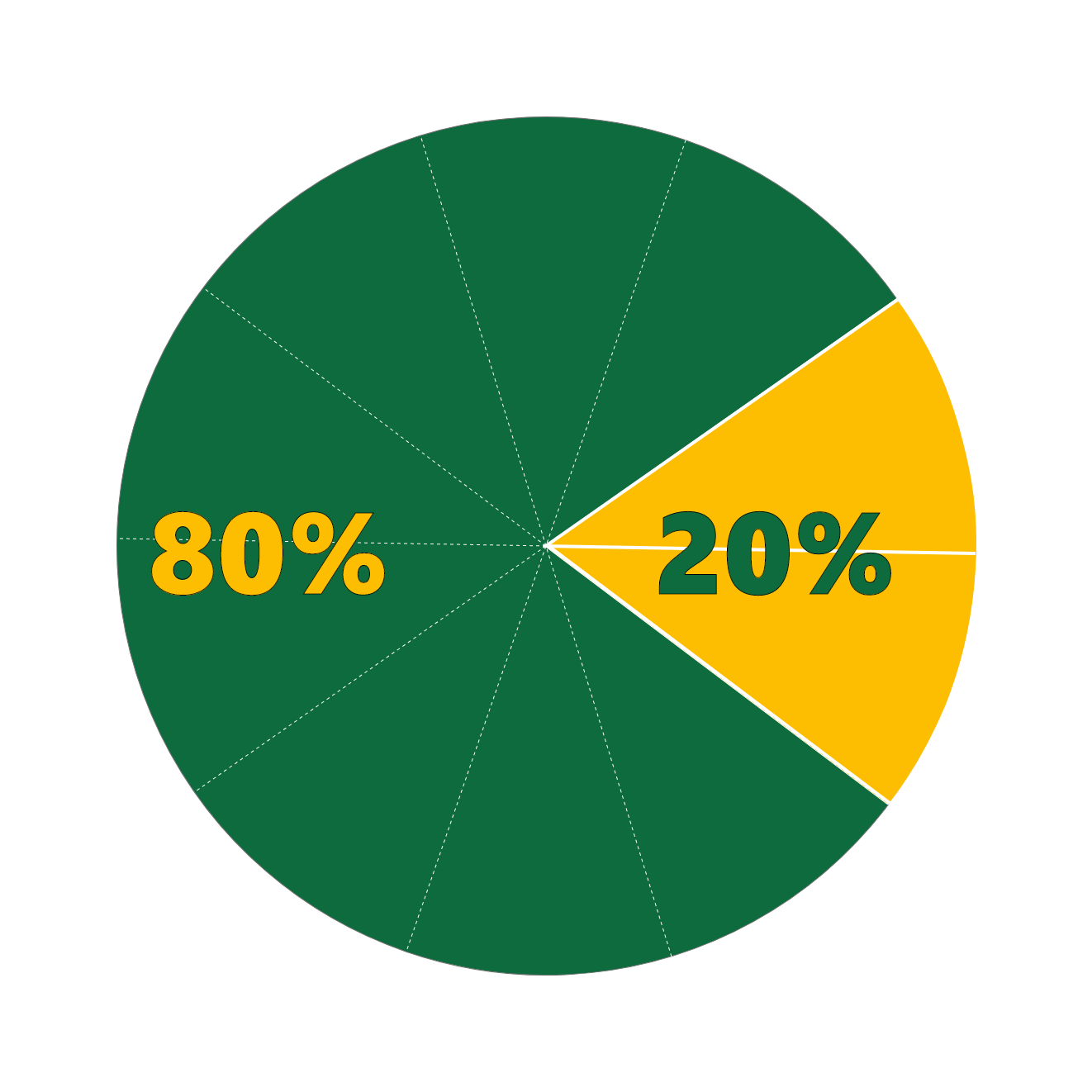
If Mr A owns 8 of the 10 slices and an investor owns 2, Mr A owns 80% of the business and the investor owns 20%, no matter how large or small the whole pizza is worth in money.
The number of slices you start with doesn't matter, only the number of slices that exist in total. A pizza cut into 10 slices where you own 2 is exactly the same 20% as a pizza cut into 100 slices where you own 20. This is why a "share" on its own means nothing without knowing the total number of shares issued.
Equity is a permanent slice of the pizza, its value depends on how big the whole pizza is. A loan (covered in a later chapter) works differently: the lender expects the exact amount back, plus interest, regardless of what happens to the size of the pizza.
Here's the full story from the start of this chapter.
Mr A runs a small tailoring business in Lagos. After years of growth, he has a three-month waiting list and nowhere to put a second workshop. He needs ₦5,000,000 for new space and machines.
A long-time customer, Mr B, offers to invest that ₦5,000,000, not as a loan, but in exchange for a permanent slice of the business.

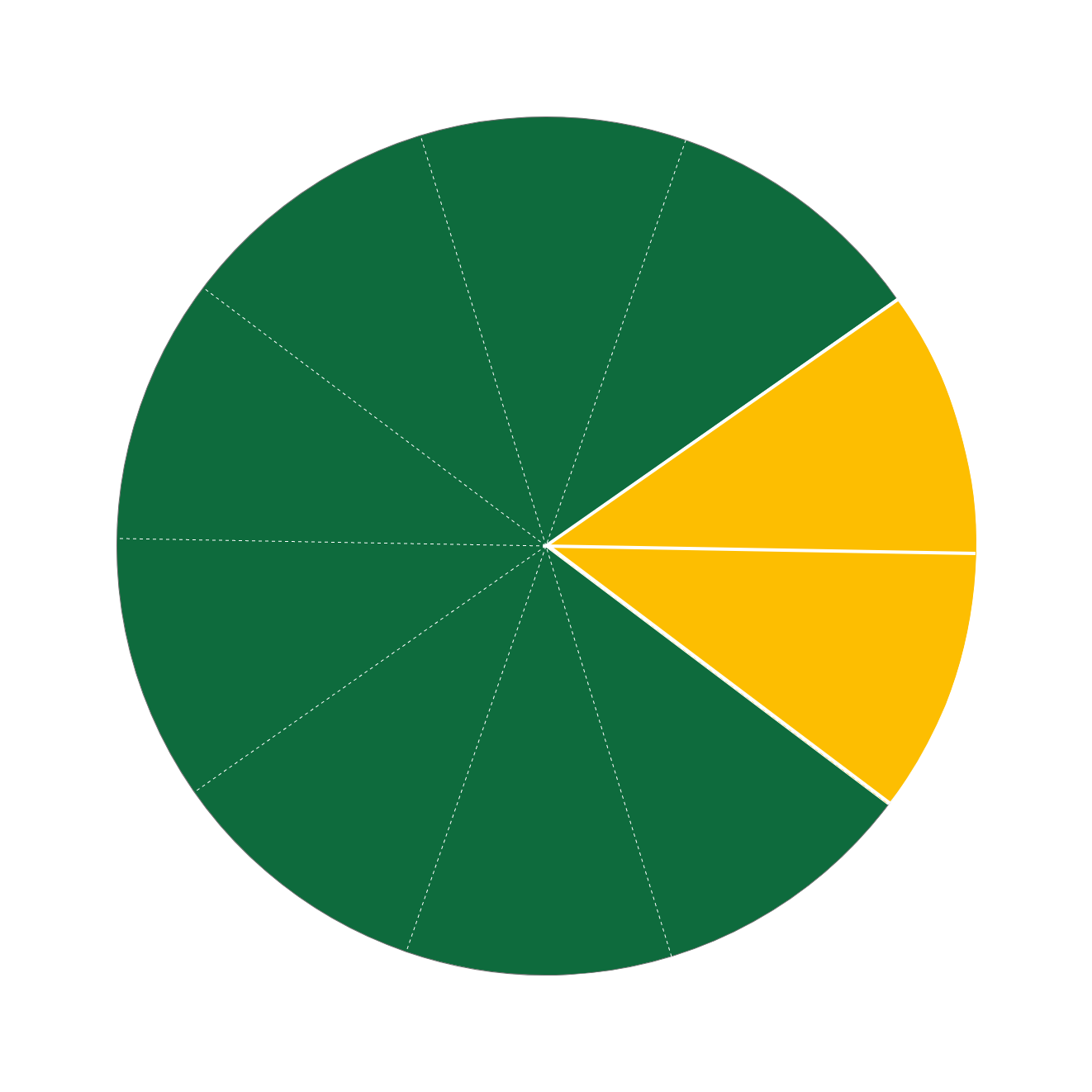
Before Mr B's money arrived, Mr A owned 100% of a business worth ₦20,000,000. After the investment, the business was worth ₦25,000,000 (its old value, plus the new ₦5,000,000 cash), and Mr B owned 20% of it.
Notice what did not happen: Mr B was not promised his ₦5,000,000 back on a fixed date. He now simply owns a slice of Mr A's business, for as long as he holds his shares.
Read the full story: Case Study, MANIAC MINDZ Takes On an Investor
Owning a slice of equity can come with several different rights, depending on what type of share it is (more on this in Section 6).
| What You Get | In Plain Language |
|---|---|
| Ownership | You legally own that percentage of the company's value. |
| Voting rights | You may get a vote on major company decisions, one vote per share is common, but not guaranteed. See Voting Rights. |
| Dividends | You may receive a share of the company's profit, in proportion to your ownership, but only if and when the company decides to pay one. See Dividend. |
| Capital appreciation | If the company becomes more valuable, your slice becomes worth more money, even though your percentage doesn't change. |
| Risk | If the company loses money or fails, your slice can become worth less, even worth nothing. |
| No guaranteed repayment | Unlike a loan, nobody promises to ever hand your original money back. |
| Long-term commitment | Equity usually doesn't expire. It becomes a permanent part of the company's ownership structure until it's sold, bought back, or the company closes. |
| Transferability | Shares can often (not always) be sold or transferred to someone else, subject to any agreement in place. |
| Exit rights | Any agreed way of eventually converting your shares back into cash, for example, selling them to the founder, to a new investor, or on the open market. |
Because equity rarely expires and rarely guarantees repayment, giving away equity should never be treated as casually as taking a loan. You are not borrowing money, you are permanently sharing ownership of everything you build from here on. And the risk runs both ways: if the business fails, the investor's money can go to zero, see Chapter 6: What Happens If the Business Fails?
Before you can work out what percentage an investor receives, you need to agree on what the whole business is worth. This estimate is called a valuation.
| Term | Meaning |
|---|---|
| Pre-money valuation | What the business is considered worth before the new investment is added. |
| Post-money valuation | What the business is considered worth after the new investment is added: Pre-Money + Investment = Post-Money. |
Worked Example (Mr A & Mr B):
| Step | Calculation | Result |
|---|---|---|
| 1. Pre-money valuation | (agreed before the deal) | ₦20,000,000 |
| 2. Investment amount | Mr B's contribution | ₦5,000,000 |
| 3. Post-money valuation | ₦20,000,000 + ₦5,000,000 | ₦25,000,000 |
| 4. Investor's percentage | ₦5,000,000 ÷ ₦25,000,000 | 20% |
| 5. Founder's remaining percentage | 100% − 20% | 80% |
Dividing the investment by the pre-money valuation instead of the post-money valuation. ₦5,000,000 ÷ ₦20,000,000 would (incorrectly) suggest 25%, but the ₦5,000,000 itself is now part of the company too, so it must be included in the number you divide by (the bottom of the fraction).
Work through your own numbers: Ownership Percentage Calculator
Not every slice of pizza comes with the same toppings. The two most common categories of shares are ordinary and preferred.
Usually one vote per share. Dividend only if declared. Paid last if sold. Unlimited gain if the company grows.
Founders, long-term believersSometimes limited voting. Often a fixed or priority dividend. Paid before ordinary. Gain is sometimes capped.
Investors wanting safety| Ordinary Shares | Preferred Shares | |
|---|---|---|
| Typical voting rights | Yes, usually one vote per share | Sometimes limited or none |
| Dividend | Only if declared, no fixed amount | Often a fixed or priority dividend |
| Priority if company is sold or closes | Paid last, after preferred shareholders | Usually paid before ordinary shareholders |
| Gain if the company grows a lot | Unlimited | Sometimes capped |
| Best suited for | Founders, long-term believers in growth | Investors wanting more safety and predictability |
Beyond these two broad categories, several more specific types of equity exist, voting shares, non-voting shares, founder shares, restricted shares, redeemable shares, employee shares, and treasury shares. Each is covered in full, with worked examples, in Chapter 4: Types of Equity.
A software company (Nimbus Labs) raising money from a professional investor will often use preferred shares, because the investor wants priority if the company is sold. A tailoring shop like Mr A's, raising money from a trusted personal contact like Mr B, will more often use simple ordinary shares, because the relationship is built on trust rather than a formal safety net.
Dilution is what happens to an existing owner's percentage when new shares are issued to someone else. The pizza gets cut into more slices, so each existing slice becomes a smaller fraction of the whole, even if the whole pizza has grown bigger.
Worked Example: Two years after Mr B's investment, Mr A (80%) and Mr B (20%) bring in a second investor, Mr C, who receives 15% of the company for a fresh amount of cash.
| Owner | % Before New Investor | Calculation | % After New Investor |
|---|---|---|---|
| Mr A | 80% | 80% × (100% − 15%) | 68% |
| Mr B | 20% | 20% × (100% − 15%) | 17% |
| Mr C (new investor) | - | - | 15% |
| Total | 100% | 100% |
Notice that Mr A's and Mr B's percentages both shrank, but if the new investment makes the whole business more valuable, the money their smaller percentages are worth can still go up. This is exactly what happened to Mr B's original 20% in the full case study.
Dilution isn't automatically bad. Ask: "Is my smaller slice of a bigger pizza worth more than my bigger slice of the old, smaller pizza?" If yes, dilution has made you richer, even though your percentage dropped.
A cap table (short for capitalization table) is the master record listing every owner of a business, how many shares they hold, and what percentage that represents. Every equity transaction, a new investor, a buy-back, a transfer, must update this one document.
| Owner | Shares | % Ownership |
|---|---|---|
| Mr A (Founder) | 800 | 80% |
| Mr B (Investor) | 200 | 20% |
| Total | 1,000 | 100% |
Use the fillable version: Cap Table Template
If the percentages in your cap table ever add up to anything other than exactly 100%, stop, a transaction is missing, mis-recorded, or miscalculated. See Common Mistakes below.
| Business | What Equity Looks Like Here |
|---|---|
| MANIAC MINDZ (Tailoring) | A trusted customer invests cash for a workshop expansion in exchange for ordinary, non-voting shares, a personal relationship with a simple structure. |
| City Kitchen (Restaurant) | A family member invests savings to open a second location, receiving shares plus a seat at monthly menu-and-budget decisions, voting rights matter more here because daily decisions (menu, hours, hiring) directly affect the investor's returns. |
| Golden Crust Bakery (Retail) | The bakery brings in a silent equity partner (an investor who owns a share but doesn't help run the business) who supplies delivery vans in exchange for shares instead of cash, a reminder that equity doesn't always have to be paid for in money alone; it can be paid for in assets or services, if all parties agree on their value. |
| Nimbus Labs (Technology) | A professional investor buys preferred shares with a fixed dividend and priority repayment if the company is sold, a more formal, legally heavier structure typical of technology investment. |
Whether it's a sewing workshop, a kitchen, a bakery van, or a software company, the underlying math is identical: Investment ÷ Post-Money Valuation = Investor's Percentage. Only the type of shares and the formality of the agreement tend to change with the industry and the size of the investment.
| Good Example | Bad Example | |
|---|---|---|
| Valuation | Agreed in writing, based on real numbers (equipment, order book, profit trend) | "Round number" picked with no basis, never written down |
| Share type | Clearly stated (ordinary/preferred, voting/non-voting) | Never specified, assumed to be "normal shares" |
| Documentation | Shareholders' Agreement signed before money changes hands | Money transferred on a handshake, "we'll sort the paperwork later" |
| Cap table | Updated the same week, single source of truth | No cap table exists; ownership is "just known" between two people |
| Exit terms | Lock-in period and exit process agreed in advance | No plan for what happens if the investor wants out |
Treating an equity investor as if they must be repaid a fixed amount, on a fixed date, like a loan. Equity has no guaranteed repayment, see Section 4.
Calculating the investor's percentage using the wrong valuation base. See Section 5.
Promising several investors a percentage each without checking the total. Six investors each promised "20%" would be 120%, mathematically impossible. Every new percentage must come out of the remaining, undiluted pool, not out of a fresh 100%. See Section 7, Dilution.
Relying on memory instead of a written, constantly updated cap table. See Section 8.
Accepting an investor's money with no agreement about how or when they can ever sell their shares.
Q: If new partners come in tomorrow, does that mean they all get the same percentage if they offer the same amount of money? A: No. Percentage depends on the valuation at the time each investor joins, not just the amount of money. An investor putting in ₦5,000,000 when the business is worth ₦20,000,000 pre-money gets 20%. A later investor putting in the exact same ₦5,000,000 when the business has grown to ₦45,000,000 pre-money would only get 10% (₦5,000,000 ÷ ₦50,000,000 post-money), because their money is buying a slice of a bigger pizza.
Q: If I bring in more partners, does that mean I no longer have a share of the business? A: No. You still own your shares, your percentage simply gets diluted, as shown in Section 7. You do not lose ownership; your slice becomes a smaller fraction of a (hopefully) larger pizza.
Q: Can percentages exceed 100%? For example, "6 investors, 20% each" is 120%, is this possible? A: No, this is mathematically impossible and is a sign of a serious error. The percentages of every owner (founder included) must always add up to exactly 100%. If you want to give six different people equity, each new investor's percentage must be calculated from the remaining ownership pool at the time they join, which is exactly what dilution calculates.
Q: What should we avoid altogether? A: Avoid promising a percentage before agreeing on a valuation, avoid verbal-only agreements, avoid mixing up pre-money and post-money, and avoid giving away large percentages early without reserving room for future investors and future employees.
Q: Do dividends have to be paid every year? A: No, not unless a specific agreement says so (common with some preferred shares). For ordinary shares, dividends are usually paid only when the company's owners decide there is profit worth distributing. See Dividend.
Q: What happens if the investor or the founder dies? A: This should always be addressed directly in the Shareholders' Agreement (see Chapter 12: Legal Agreements). Shares typically pass to the deceased's estate unless a buy-back clause says otherwise (Chapter 14).
Q: What happens to the investor's money if the business loses money or fails completely? A: This question deserves, and has, its own full chapter: Chapter 6: What Happens to the Investor's Money If the Business Fails?. The short version: an equity investor is not automatically refunded, stands last in the payout queue when a business closes, and can lose everything, but normally loses no more than what they invested, thanks to limited liability.
Using the Ownership Percentage Calculator:
If your business needed ₦5,000,000 today, would you rather give up 20% of it forever, or repay a loan with interest over three years? There's no single right answer, it depends on how confident you are that the business will keep growing, and how much control you're willing to share. Revisit this question after reading Chapter 5: Loans and Debt Financing, it runs this exact loan through MANIAC MINDZ's real numbers.
Before signing any equity agreement, work through: Checklist, Before You Give Away Equity