Volume 27, Chapter 2
Building Your First Dashboard
Definition
Two earlier attempts at a dashboard at MANIAC MINDZ had quietly faded away within a few weeks, filled in enthusiastically at first, then forgotten once the initial motivation faded. Nothing was wrong with the numbers themselves. The habit just never took hold.
puts Chapter 1's seven numbers into an actual, usable weekly view, applying Volume 21's dashboard principles (specific, owned, reviewed on a set rhythm) to a concrete, ready-to-fill template.
Why do good dashboards so often fade out after a few weeks? Because "remember to fill in the dashboard" is a standalone good intention, and standalone good intentions quietly lose to a busy week, every time. A dashboard survives not by being more polished, but by being attached to something that already happens reliably, like an existing weekly meeting.
A first dashboard doesn't need software, a single page, filled in the same way every week, is enough to start. What matters is that it actually gets filled in and actually gets looked at, not how polished it looks.
The Simple Weekly Format
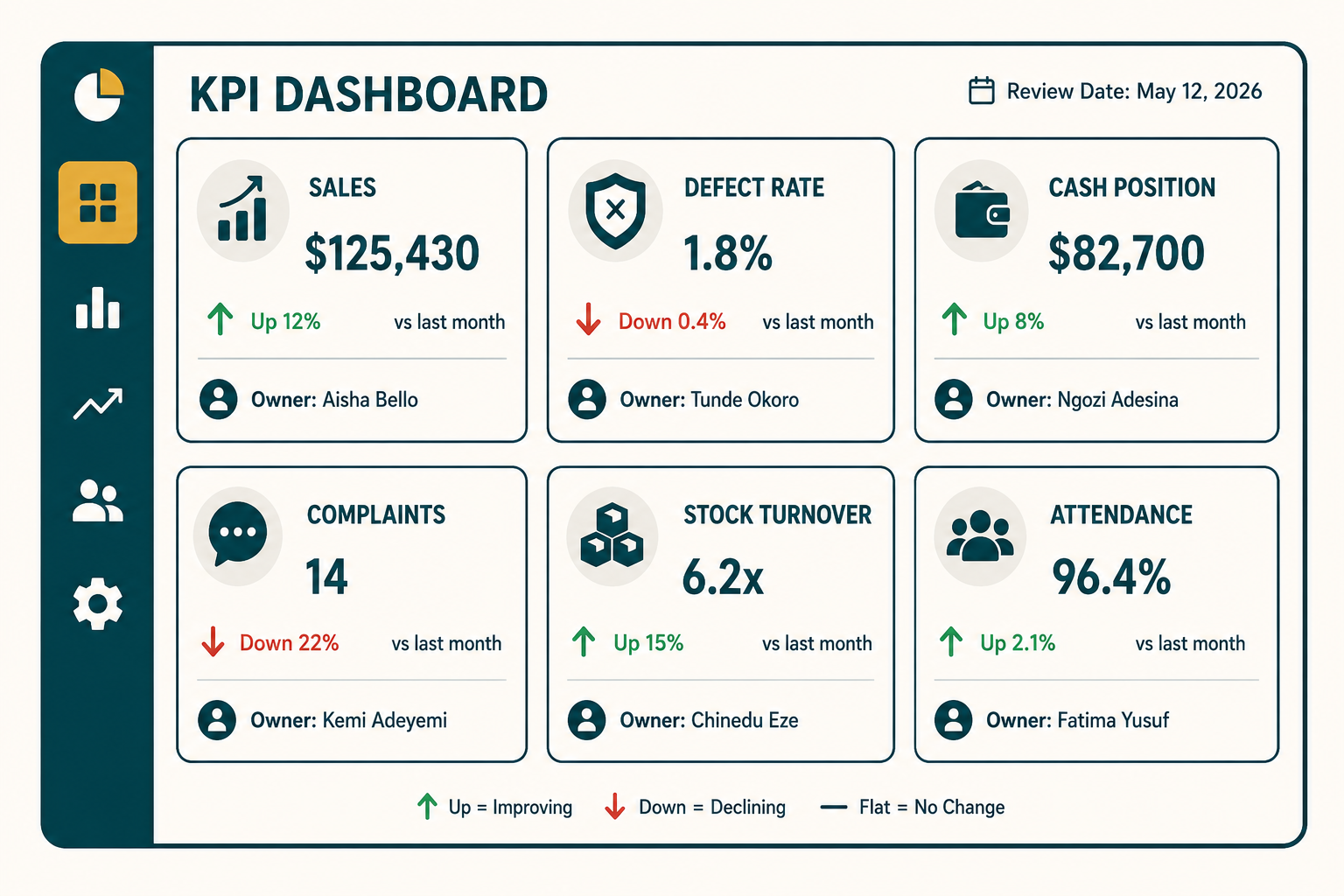
Recall Volume 21, Chapter 2's warning: more isn't better. A first dashboard should hold exactly Chapter 1's seven numbers, no more, each with this week's value, last week's value, and a one-glance trend.
Ready-to-use format: Weekly Dashboard Template
Making It a Habit, Not a One-Time Exercise
A dashboard filled in once and never updated again provides no more benefit than never having built one. Pick a fixed day and time each week, the same slot Volume 22's meeting rhythm already reserves for this review, and treat filling it in as non-negotiable as Volume 18's opening checklist.
Example Story: The Dashboard That Finally Stuck
Here's the full version of the two-failed-attempts story from the start of this chapter.
Two earlier attempts at a dashboard at MANIAC MINDZ had quietly faded away within a few weeks, filled in enthusiastically at first, then forgotten once the initial motivation faded.
The third attempt changed only one thing. It was tied to an already-existing fixed weekly meeting slot, rather than relying on remembering to do it separately. A habit attached to an existing routine survived long after a standalone good intention hadn't.
Across Industries
The best moment to run the weekly review depends on each business's own natural rhythm.
| Business | Where the Weekly Dashboard Review Fits |
|---|---|
| Golden Crust Bakery | Monday morning, before the week's ordering begins |
| Rapid Auto Works | Friday afternoon, closing out the week's completed jobs |
| Precision Print & Press | The start of the weekly team meeting |
Common Mistakes
The exact failure in the first two attempts in the example story.
Recreates Volume 21's fifty-KPI mistake at a weekly rhythm instead of monthly.
A single week's number in isolation hides the trend that actually matters.
Quiz Yourself
Practice Exercise
Fill in the Weekly Dashboard Template with this week's actual numbers. Attach the review to an existing weekly meeting slot, not a new, separate reminder.
Quick Summary
Quick Summary
- A first dashboard needs exactly seven numbers, each with this week's value, last week's, and a trend, no more.
- Attach the weekly review to an already-existing routine so the habit actually survives.
- Next, Chapter 3: Monthly and Growth Metrics covers the numbers that reveal efficiency, not just size.